
Hey everyone, as a gamer who’s been following the scene closely, I have to say, the wait for Black Myth: Wukong feels like watching a legendary beast slowly emerge from an ancient mist. It’s 2026 now, and looking back at its journey from those early reveals to its eventual launch and beyond has been a fascinating ride. The game truly carved its own path in the Soulslike genre, blending high-fantasy action with deep-rooted Chinese mythology in a way that felt both fresh and profoundly respectful of its source material. I remember the buzz around that Gamescom demo back in the day—it was the moment the game stopped being just a stunning trailer and started feeling like a real, tangible challenge waiting for us.
✨ A Combat Ballet of Myth and Might
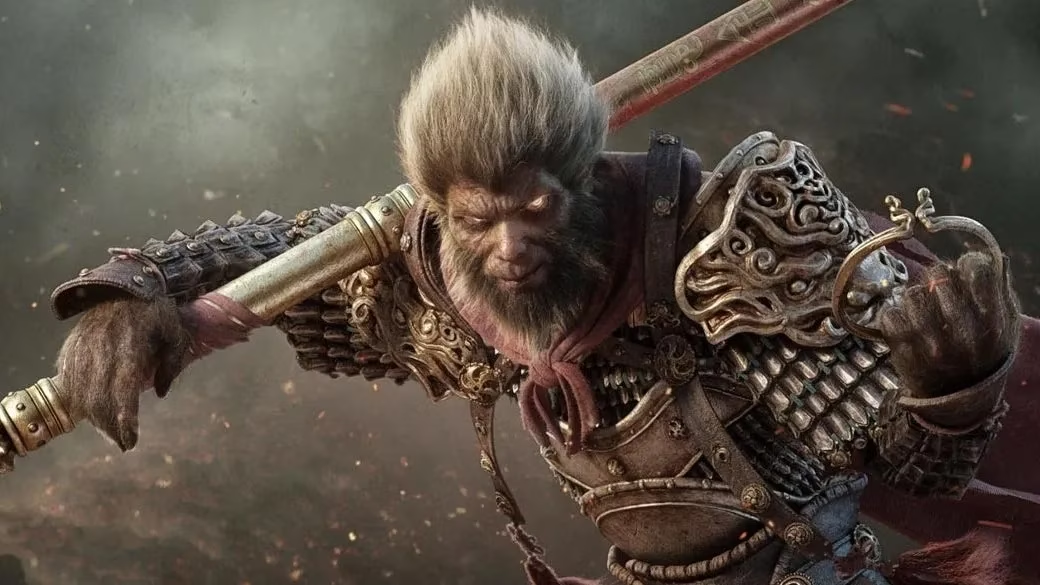
Let’s talk about what really hooked me: the combat. The early glimpses promised something special, and the final game delivered. It wasn’t just another dodge-and-hit simulator. Controlling the Destined One felt like conducting a violent symphony. His movements were a blend of brutal efficiency and almost poetic grace. Remember that iconic move where he’d spin his staff to deflect projectiles? Playing it, it felt less like a simple block and more like weaving a temporary shield out of pure kinetic energy—a hummingbird’s wings creating a hurricane. The acrobatics were insane; the jumps weren’t just high, they were narrative. Launching into the air felt like a declaration of defiance against gravity itself, setting up plunging attacks that struck with the sudden, decisive force of a thunderclap splitting a silent sky.
The enemy design was where the mythos came alive. We weren’t just fighting generic monsters; we were battling legends. Each creature, from the lowliest yao guai to the majestic celestial beings, moved with a purpose and personality drawn straight from the folklore. It made every encounter feel significant, a piece of a larger story.
📖 More Than a Game: A Cultural Pilgrimage
For me, and I think for many, Black Myth: Wukong transcended being just a game. It became a portal. Being immersed in its world was like taking a pilgrimage through a living, breathing version of Journey to the West. The landscapes weren’t just backdrops; they were characters—towering mountains that felt like the bones of the earth, ancient forests whispering with forgotten magic, and temples that held secrets in their very dust. The attention to detail in the art, architecture, and even the sound design built a world that felt authentically awe-inspiring and spiritually heavy.
Of course, the journey to get here wasn’t without its shadows. The controversies surrounding the studio’s leadership in the early 2020s cast a long pall. As players, we were stuck in a difficult position, grappling with the separation of art from the artist. It sparked necessary and ongoing conversations within our community about the values we support and the complexities of consuming media. This history remains a part of the game’s story, a reminder of the human flaws behind digital creations.
🎮 The Legacy in 2026
So, where does Black Myth: Wukong stand now, a couple of years after its Summer 2024 release? In my view, its legacy is secure on a few key pillars:
| Pillar | Description | Impact |
|---|---|---|
| Combat Innovation | Fluid, acrobatic system that rewarded aggression and precision equally. | Raised the bar for stylistic action in Soulslikes. |
| Cultural Showcase | Deep, respectful integration of Chinese mythology and aesthetics. | Proved the massive global appeal of culturally specific stories. |
| Technical Artistry | Breathtaking visuals and creature design that set new benchmarks. | Still used as a reference point for graphical fidelity in action RPGs. |
| Narrative Ambition | A personal, reinterpretive take on a classic tale. | Inspired more games to explore local folklore with a modern lens. |
Playing it today, it holds up remarkably well. The combat is still satisfyingly tight, the world still immersive, and the challenge still respectably fierce. It opened doors, showing the industry and players alike that there’s a hungry audience for myths beyond the usual Greek/Norse canon. Its success, flawed and complicated as the path may have been, feels like a crack in a dam—I’m excited to see what other long-ignored stories come flooding through next.
In the end, my experience with Black Myth: Wukong was like finding a beautifully illustrated, yet fiercely challenging, ancient text. You could admire the artwork on the surface, but to truly understand it, you had to decipher its language, engage with its trials, and earn its wisdom. It’s a game that demanded more than button presses; it asked for engagement, reflection, and a bit of your own spirit to complete the journey. And honestly? That’s what makes it unforgettable.