Black Myth: Wukong’s Global Reach Looks Even Stronger in 2026
Black Myth: Wukong sales reveal a powerful international audience, proving its Chinese mythology and universal themes transcend cultural borders.
As a player who has followed Black Myth: Wukong since its August 2024 launch, I think the most interesting sales story in 2026 is not the initial hype. It is the durability of its international audience. Game Science co-founder and art director Yang Qi reportedly said at the West Lake Art Forum, hosted by the School of Animation and Games at the China Academy of Art, that about 30% of the game’s total sales came from outside China. That is roughly one-third of the audience, and Yang said the result completely exceeded the studio’s expectations. The first wave of coverage framed the game as a Chinese phenomenon, and with China’s massive gaming market that was a fair starting point. But the international share tells me the game crossed cultural borders in a way that is hard to dismiss.
The initial report emerged roughly six months after launch, and even then the numbers challenged the idea that Black Myth: Wukong was only a local sensation. Some critics dismissed its achievements as purely domestic. I understand why that argument appeared, but the data points in another direction. Yang’s 30% figure, cited via translation tools, suggests that players outside China were not merely curious. They were buying, playing, and praising the game. For me, that is the difference between a regional blockbuster and a global powerhouse.
Why the International Share Matters
I am not an industry analyst, but I have watched enough launches to know that a 30% overseas share is meaningful. It means the game did not rely solely on cultural familiarity. Many international players do not have a deep connection to Journey to the West. They may not understand the spatial designs, character aesthetics, story elements, or presentation choices in the same way a Chinese player might. Yet Yang’s point is that this does not block appreciation. Players can still resonate with the game’s core messages because those messages connect to common experiences.
That is a crucial insight for me as a player. I do not need to know every mythic reference to feel the weight of a boss fight or the pull of a journey. The game’s visual identity, combat rhythm, and emotional through-line can carry the experience. Yang described familiarity and unfamiliarity as existing on a spectrum, which aligns with the philosophy of The Doctrine of the Mean, a classic Chinese philosophical work centered on balance and avoiding excess. In game design terms, that balance may be the secret: enough cultural specificity to feel fresh, enough universal feeling to remain accessible.
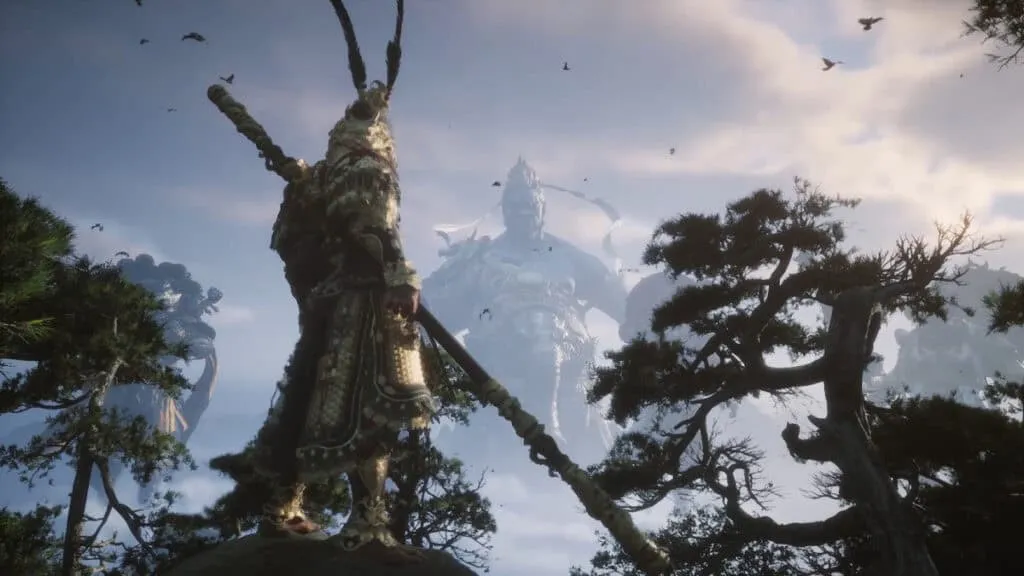
Yang also suggested that in a high-quality digital experience, elements players have never seen before, never imagined, but still find visually striking can spark even greater curiosity. I think that is exactly what happened here. The unfamiliarity did not repel players. It invited them in. The game looked different from the usual fantasy template, and that difference became a selling point rather than a barrier.
The Numbers Behind the Story
According to calculations from the 80LV publishing network, the 30% international share translates to around 7.5 million copies sold outside China. That number amounts to roughly $225 million in revenue. Reports have claimed that the game’s production budget was around $70 million, while the development cost itself, discounting marketing and other expenses, was only about $43 million. When I look at those figures together, the conclusion is hard to avoid: the international market alone covered the production budget several times over.
| Metric | Reported figure | What it means to me |
|---|---|---|
| Sales outside China | About 30% | The game was not only a domestic success |
| International copies | Around 7.5 million | A large overseas player base bought in |
| International revenue | Around $225 million | Overseas sales had major financial weight |
| Reported production budget | About $70 million | The international revenue covered it three times over |
| Reported development cost | About $43 million | The core build was relatively lean |
📊 These numbers are not just bragging rights. They show that Black Myth: Wukong found a global audience despite strong cultural influences. I have seen players online discuss the game through translation tools, share boss strategies across languages, and compare notes on visual design. That kind of organic conversation is difficult to fake. It also explains why the game’s overseas performance feels more impressive in 2026 than it did during the launch window. The story has had time to settle, and the international share still stands out.
What I Take Away as a Player
🎮 As a player, I care less about corporate milestones and more about whether a game can travel. Black Myth: Wukong traveled. It did not require every player to arrive with deep knowledge of its source material. It offered a high-quality digital experience with striking visuals, strong core messages, and enough mystery to make unfamiliar players lean in. That is a rare combination.
🌍 The 30% overseas share also changes how I think about the game’s legacy. If one-third of sales came from outside China, then the game’s success cannot be explained away as purely domestic. It had to compete for attention in different markets, across different languages, and against different cultural expectations. The fact that it still resonated gives the achievement more weight.
💡 Yang’s comments about balance are the part I keep returning to. Familiarity and unfamiliarity are not opposites. They can work together. A game can be deeply rooted in one culture and still speak to players elsewhere. Black Myth: Wukong seems to have found that middle ground. It gave international players something they had never seen before, but it did not make them feel shut out.
In 2026, with the launch hype long behind us, that is the lesson I take from the sales data. Black Myth: Wukong was not just a local sensation. It was a global success with a Chinese core. The overseas numbers are large enough to matter on their own, and the creative approach behind them is just as important. Even without Chinese players, the game would still have been a success. That is the clearest conclusion I can draw from the figures, and as a player, it makes the achievement more impressive rather than less.