A Phone Chipset Made Black Myth: Wukong Playable, and 2026 Changes the Story
Snapdragon 8 Elite Leading Edition runs Black Myth: Wukong at 30–50 FPS via Winlator, proving smartphone gaming silicon is closing the PC gap.
The story starts with a simple question: can a smartphone chipset survive Black Myth: Wukong? On paper, the answer should be a polite no. The game is built on Unreal Engine 5, it is visually breathtaking, and it has a well-earned reputation for bringing high-performance hardware to its knees. Yet a test from Chinese YouTuber Geekerwan showed the Snapdragon 8 Elite Leading Edition, a slightly overclocked version of Qualcomm’s flagship SoC, doing something that sounds almost unreasonable inside a RedMagic 10S Pro+. The phone did not just boot the game. It produced a playable frame rate.

To be clear, this was not a native Android release. Winlator, a Windows emulator, was baked into the phone, and that made it possible to fire up the PC version. The settings were modest: 1,600 x 720 resolution, the lowest possible image quality, and NXSR, an experimental super resolution sampling method added in a later patch, running at 50 percent base resolution. Even with those compromises, the result was between 30 and 50 FPS. Stuttering was still there, and GPU utilization was all over the place, but the chipset was getting the job done.
| Test setting | Result |
|---|---|
| 1,600 x 720, lowest quality, NXSR at 50 percent | 30 to 50 FPS |
| Resolution scaling at 100 percent | Under 20 FPS |
| Adreno GPU temperature | Around 40 degrees Celsius |
| Cooling system | RedMagic 10S Pro+ |
Then the resolution scaling went to 100 percent. The GPU utilization problem disappeared, but the frame rate fell below 20 FPS. That is the honest boundary line. The Snapdragon 8 Elite Leading Edition can run Black Myth: Wukong, but it cannot run it cleanly without upscaling and image quality cuts. Thermals were not the villain here: the Adreno GPU sat at around 40 degrees Celsius, and the RedMagic 10S Pro+ cooling system kept the phone from turning into a hand warmer. The GPU simply ran out of headroom.
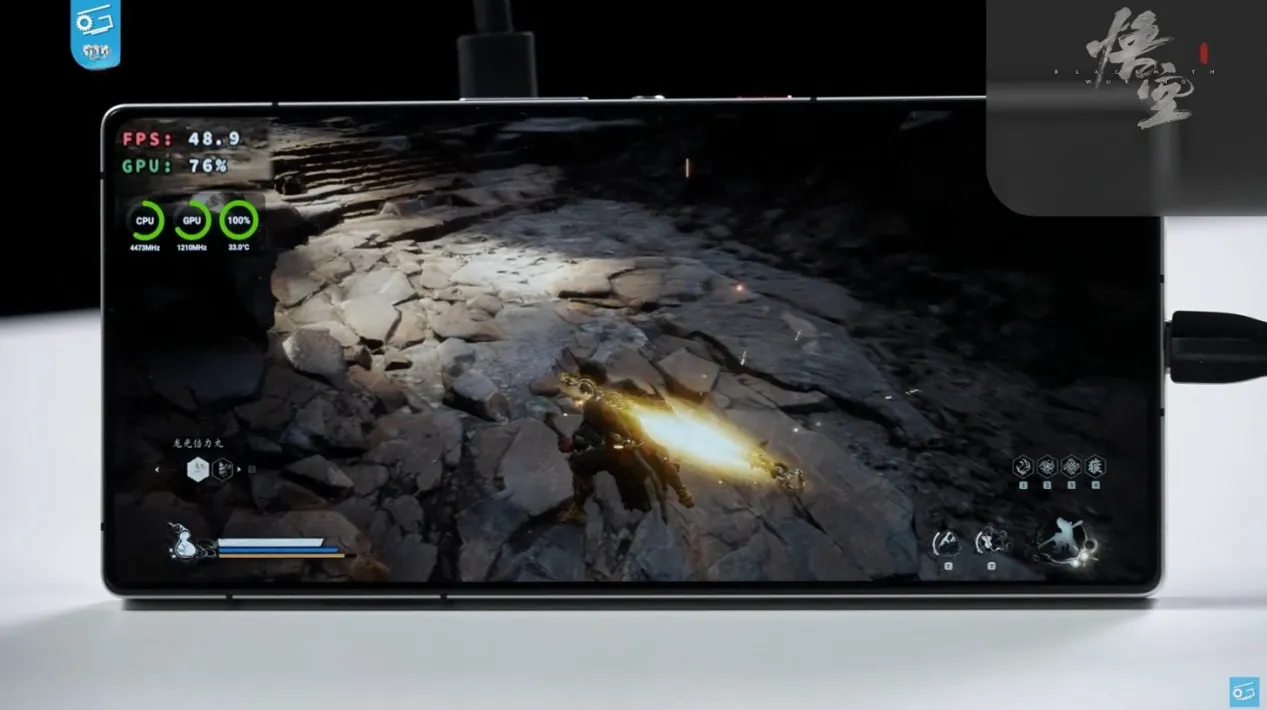
Let’s be real: this is not a console replacement, and nobody should expect a smooth 60 FPS experience from a phone running a PC game through emulation. The win is symbolic. A smartphone silicon package, with enough cooling and the right software stack, can now drag a demanding Unreal Engine 5 title into playable territory. That is no small feat.
By 2026, the context matters even more. The original report expected the Snapdragon 8 Elite Gen 2 to arrive later that year and exceed its predecessor. That successor generation has since become part of the 2026 flagship conversation, and mobile GPUs have continued to close the gap with entry-level PCs. The RedMagic test is best read as an early signal: the hardware required for serious Android gaming is finally here, even if the software ecosystem is not.
Why are game developers not supporting Android natively? The question is fair. Emulation is a clever workaround, but it is not a walk in the park for battery life, thermals, or frame pacing. Native ports would be better. The problem is economics, tooling, and control schemes, not just raw performance. Still, the demo makes the argument harder to dismiss. When a phone can hit 30 to 50 FPS in Black Myth: Wukong with upscaling, the old excuse that mobile hardware is not ready starts to sound tired.
Personification? The chipset refuses to fold. The Adreno GPU held the line at 40 degrees Celsius. The phone shrugged off the heat, even as the frame graph wobbled. That is the kind of image that makes mobile gaming fans sit up.
Of course, caveats remain. The image quality was low, the resolution was 720p, NXSR introduced artifacts, and stutter was still part of the experience. A 100 percent scaling run dropped below 20 FPS, which is a reminder that the margin is thin. Battery drain, sustained performance, and emulator compatibility will decide whether this is a novelty or a preview. But as a preview, it is compelling.
2026 does not make the RedMagic 10S Pro+ test new. It makes it more important. The phone proved that the ceiling is higher than many expected, and the next wave of flagship chips has raised it again. The real breakthrough will come when developers treat Android as a first-class target, not an afterthought. Until then, emulation demos like this one are the smoke signal. The hardware is knocking. The software just needs to answer.